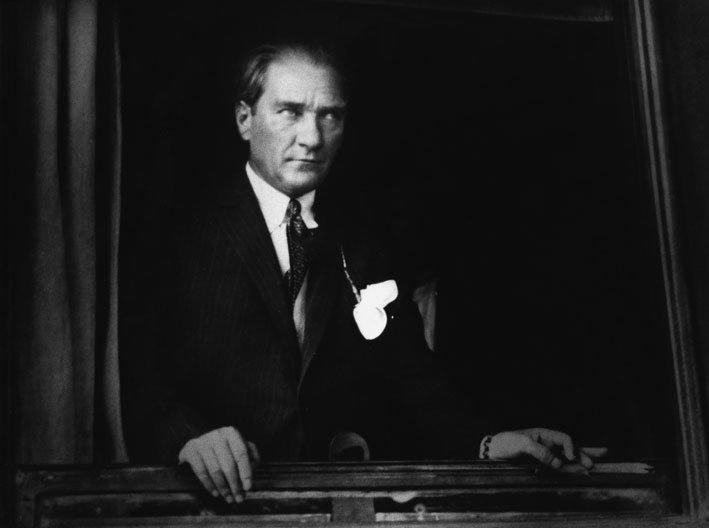
Mustafa Kemal was born in 1881 in Salonica, then a city of the Ottoman Empire. The precise day of his birth is not known. Salonica, today Thessaloniki in Greece, passed out of Ottoman control during the First Balkan War in 1912. His father was Ali Rıza Efendi and his mother was Zübeyde Hanım.
He attended military schools in Salonica and Monastir before entering the Military Academy in Istanbul in 1899. After graduating in 1902, he continued at the Ottoman Military Staff College and completed his studies in 1905 as a staff officer.
His early service included an assignment to the Fifth Army in Damascus and staff duties in the late Ottoman army. In 1909 he served with the Action Army during the 31 March crisis. He later served in the Tripolitan War around Tobruk and Derna, in the Balkan Wars, and from 1913 as military attaché in Sofia.
During the First World War, his command at Gallipoli in 1915 brought him national prominence. He subsequently held command responsibilities on the Eastern Front and in 1917–1918 with the Seventh Army on the Syria–Palestine front.
The Ottoman Empire signed the Armistice of Mudros on 30 October 1918. The following months brought Allied military control and territorial occupations in different parts of the empire. Greek forces landed at İzmir on 15 May 1919, four days before Mustafa Kemal left the official Ottoman chain of command in Istanbul for his inspection mission in Anatolia.
He arrived in Samsun on 19 May 1919 as Ninth Army Inspector. As his work moved beyond the scope intended by the Istanbul authorities, he was ordered to return. The Amasya Circular, his resignation from military service, and the Erzurum and Sivas congresses transformed his position from an Ottoman officer into the central civilian leader of an organised national movement.
Between 1919 and 1922, he led the political organisation centred first on the Representative Committee and then on the Grand National Assembly. As Commander-in-Chief he directed the Battle of Sakarya and the final campaign culminating in the Great Offensive of 1922.
The Treaty of Lausanne was signed on 24 July 1923, Ankara became the capital on 13 October, and the Republic was proclaimed on 29 October. Mustafa Kemal was elected its first President and remained in office until his death. His presidency was marked by extensive political, legal, educational, linguistic and social reforms.
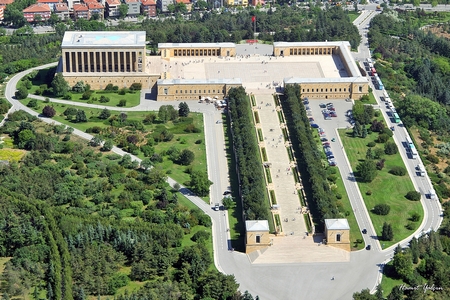
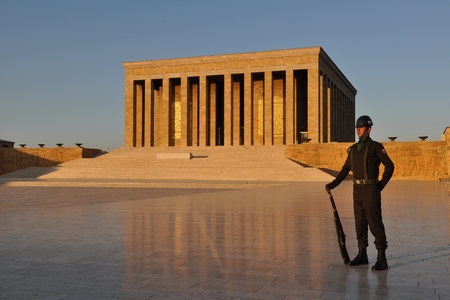
Atatürk died at Dolmabahçe Palace in Istanbul on 10 November 1938. On 21 November his remains were placed in a temporary tomb in the courtyard of the Ankara Ethnography Museum, where they remained until their ceremonial transfer to Anıtkabir on 10 November 1953.